Category Archives: Transportation

Rental Car Tolls in Miami: SunPass, Toll-By-Plate and What You Will Pay

Tolls are the most common surprise charge on a Miami car rental. The tolls themselves are small. What catches people is the service fee the rental company adds, and the fact that it can show up on your card days or weeks after you get home.

This guide explains how tolls work in a rental car in Miami, what the major companies charge, and how to pay less.

Fees below come from SunPass’s published summary of rental programs and from county toll schedules, checked in October 2026. Rental companies change these often, so read your rental agreement.

Why you cannot just pay cash

You cannot pay cash on Miami-area toll roads. There are no toll booths to stop at. An overhead gantry reads a transponder on the windshield or photographs the license plate.

Roads you are likely to meet:

  • Dolphin Expressway (SR 836). The main route between the airport, downtown and Miami Beach.
  • Airport Expressway (SR 112). From the airport toward I-95 and the Julia Tuttle Causeway.
  • Don Shula (SR 874), Snapper Creek (SR 878) and Gratigny (SR 924) expressways.
  • Florida’s Turnpike, including the route south toward Homestead and the Keys.
  • I-95 Express lanes. The regular lanes are free.
  • Rickenbacker Causeway to Key Biscayne and Venetian Causeway to Miami Beach. Each is $3.25 with SunPass and $6.50 by plate for a two-axle car.

The MacArthur and Julia Tuttle causeways to Miami Beach are free.

How tolls work in a rental car

In your own car, a toll without a transponder becomes a Toll-By-Plate invoice mailed to you. In a rental, the car is registered to the rental company, so the invoice goes there instead.

Here is what happens:

  1. A camera photographs the plate as you pass under the gantry.
  2. The toll is billed to the rental company’s toll program vendor.
  3. The vendor charges the credit card on your rental agreement for the toll plus a service fee.
  4. The vendor keeps the service fee. The toll agency gets only the toll.

Two consequences follow. You usually pay the higher undiscounted toll rate, not the SunPass rate. And the fee structure is whatever your rental company set.

What the major rental companies charge

These are the programs as summarized on SunPass’s rental vehicle page.

CompaniesUnlimited planIf you do not buy the plan
Enterprise, National, AlamoNone needed$4.95 for each day you use a toll, capped at about $30 per rental, plus the tolls
Avis, Budget$12.99 per day or $64.95 per week$6.95 for each day you use a toll, capped at $34.75 per rental month, plus the tolls
Payless$12.99 per day or $64.95 per week$7.95 for each day you use a toll, capped at $37.95 per rental month, plus the tolls
Hertz, Dollar, Thrifty$14.99 per day$9.99 for each day you use a toll, plus the tolls
Fox$14.49 per day, up to $217.35$15 for each toll, capped at $90 per rental, plus the tolls

With Hertz, Dollar, Thrifty, Avis, Budget, Payless and Fox, tolls without a plan are billed at the toll agency’s highest undiscounted rate.

Two words matter more than any others in these programs:

  • “Per day.” An unlimited plan is charged for every day of the rental, including days the car never leaves the hotel garage.
  • “Per usage day.” The pay-as-you-go fee is charged only on days you pass through a toll.

Sixt and other companies not listed here set fees by location. Independent and local agencies vary the most. Some include a transponder for a low flat daily rate, and others bill each toll with a fee afterward. Ask before you sign.

What it looks like on a real trip

Take a five-day rental with tolls on two days, totaling $6.

ProgramWhat you pay
Enterprise, National or Alamo$6 in tolls + 2 × $4.95 = about $16
Avis or Budget, no plan$6 in tolls + 2 × $6.95 = about $20
Hertz, Dollar or Thrifty, no plan$6 in tolls + 2 × $9.99 = about $26
Hertz unlimited plan5 × $14.99 = about $75

Now flip it. On a five-day trip with long Turnpike drives every day, an unlimited plan can come out ahead. The right choice depends on how much toll driving you will actually do.

Three ways to pay less

1. Use your own transponder

If you already have a SunPass or a prepaid Toll-By-Plate account, you can charge the rental’s tolls to it:

  1. Log in to your account.
  2. Add the rental car’s license plate.
  3. Set the start and end dates of the rental.
  4. Take your transponder with you when you return the car.

E-ZPass and several other out-of-state transponders are also accepted on Florida toll roads. SunPass lists the accepted brands on the same page.

Before you drive off, ask the counter how to make sure the car’s own toll device does not also bill you. Many rental cars have a transponder mounted in a box on the windshield that needs to stay closed.

2. Buy a SunPass when you arrive

Staying a week or more, or visiting Florida often? A SunPass can pay for itself in one trip.

  • SunPass PRO: $14.95. Portable, and it also works wherever E-ZPass is accepted.
  • SunPass Mini: $4.99. A sticker made to stay on one windshield, so it is a poor fit for rentals.

Both are sold at Publix, CVS and Walgreens, among thousands of Florida retailers. You activate the transponder and load a prepaid balance online, then add the rental plate as described above.

3. Skip the toll roads

Most trips in Miami have a free alternative. Turn on “avoid tolls” in your navigation app before leaving the rental lot. It usually adds time, sometimes a lot at rush hour, but for a short visit with a couple of local trips it can make the whole question go away.

Questions to ask at the counter

These five questions prevent most toll disputes later:

  1. Is the toll fee charged per rental day or only on days I use a toll?
  2. Is there a maximum fee for the rental?
  3. Are tolls billed at the SunPass rate or the higher plate rate?
  4. Can I use my own transponder, and how do I disable the one in the car?
  5. When will toll charges appear on my card?

Keep your rental agreement and note the times you used toll roads. Toll charges often post after the rental has closed, sometimes weeks later, and the agreement is what you will need if a charge looks wrong.

Frequently asked questions

Do I need a SunPass to drive a rental car in Miami?

No. Every major rental company has a program that lets you use toll roads without one. A SunPass only saves you the company’s service fees.

Can I pay Miami tolls with cash?

No. The toll roads in and around Miami are all electronic.

What happens if I decline the toll plan and drive through a toll anyway?

You are charged the toll plus the company’s pay-as-you-go fee. With the major brands that is between about $5 and $10 for each day you use a toll, and with some companies it is charged per toll.

How much is the Toll-By-Plate fee in Florida?

Toll-By-Plate invoices carry a $2.50 administrative charge per monthly invoice, on top of higher toll rates. In a rental, the rental company’s fee applies instead.

Is it cheaper to avoid toll roads from Miami airport?

For one or two trips, usually yes. From the MIA Rental Car Center, both nearby expressways are tolled, so set your navigation to avoid tolls before you pull out.

The bottom line

For a short Miami trip, skip the unlimited plan unless you will be on toll roads every day. Know your company’s per-usage-day fee, bring your own transponder if you have one, and use the “avoid tolls” setting for local driving. For more on driving here, see Driving in Miami: 7 Fast Facts You Need to Know.

Fees and toll rates were checked against SunPass and Miami-Dade County sources in October 2026. Rental companies change their programs often, so confirm with yours.
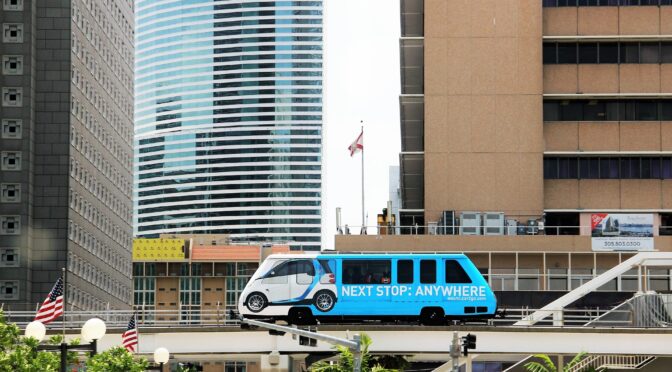
How to Get to PortMiami from Miami Airport and Fort Lauderdale Airport

PortMiami sits on an island next to downtown Miami, about 9 miles from Miami International Airport (MIA) and about 27 miles from Fort Lauderdale-Hollywood International Airport (FLL). Which airport you fly into changes the trip a lot, so this guide covers both.

Prices are typical figures from official and operator sources, checked in October 2026. The rideshare averages come from Uber’s published route data, last updated in December 2024, so treat them as a starting point. Rideshare and shuttle prices move with demand, especially on weekend cruise mornings.

Quick comparison

FromOptionTypical costTypical time
MIARideshare (Uber or Lyft)About $28 per carAbout 25 minutes
MIATaxiAbout $36 and up on the meterAbout 25 minutes
MIAMetrorail plus free trolley$2.25 per person45 minutes or more
MIACruise line transferSet by the cruise lineVaries
FLLRideshare (Uber or Lyft)About $50 per carAbout 55 minutes
FLLShared shuttleAbout $30 to $35 per person1 to 1.5 hours
FLLBrightline train plus rideshareTrain fare plus two short ridesAbout 1.5 hours
FLLTri-Rail plus MetrorailA few dollars per personAbout 2 hours

From Miami International Airport (MIA)

Rideshare

For most people this is the answer. Uber’s own route data puts the average trip at about $28 and 24 minutes. Pickups are on the arrivals level and the departures level, and the app tells you which door to use.

One car costs the same for one person or four, which makes it cheaper than a per-person shuttle for almost any group.

Taxi

Taxis wait outside baggage claim on the arrivals level. Miami-Dade County eliminated the old flat fares between the airport and the port in 2022, so the trip now runs on the meter:

  • $2.95 for the first sixth of a mile
  • $0.85 for each additional sixth of a mile up to one mile
  • $0.55 for each sixth of a mile after that
  • $0.40 per minute of waiting time
  • A $2 airport fee, and a $15 minimum for trips starting at MIA or the port
  • A 30 percent surcharge for SUVs and vans

Over 9 miles that works out to roughly $36 before any time stuck in traffic. If someone quotes you a “flat rate,” ask for the meter. Rates are posted by Miami-Dade County and on the airport’s taxi page.

Cruise line transfers

Most cruise lines sell a bus transfer from MIA. These are pre-arranged, and pickup is at the airport’s bus stations: the North station at Concourse D, level 1, Door 1, or the South station at Concourse J, level 1, Door 33.

They are priced per person, so they suit solo travelers better than families. The advantage is that the cruise line knows you are on the way.

Public transit for $2.25

It is possible, and it is cheap, but it takes patience and a willingness to walk with your bags.

  1. Take the free MIA Mover from the terminal to the Miami Intermodal Center.
  2. Ride the Metrorail Orange Line ($2.25) to Government Center.
  3. From Government Center, take the free Metromover to Freedom Tower station.
  4. Board the free City of Miami Coral Way trolley, which crosses the bridge onto the port.

Things to know before choosing this:

  • Weekends are slower. On Saturdays and Sundays the Orange Line runs only as a shuttle between the airport and Earlington Heights, where you change to the Green Line.
  • The trolley does not stop at every terminal. Its port stops were relocated in August 2025 because of construction. Depending on your ship, you may have a long walk with luggage.
  • Sunday trolley service starts at 8 a.m. and frequency varies, so this is a poor choice if you are cutting it close.

If you are traveling light and have time, it works. With a family and checked bags, take a car.

From Fort Lauderdale Airport (FLL)

FLL is often cheaper to fly into, but it is three times as far from PortMiami. Do not confuse it with Port Everglades, the Fort Lauderdale cruise port, which is right next to FLL. Check which port your ship sails from.

Rideshare

Uber’s route data puts the average FLL to PortMiami trip at about $51 and 54 minutes over 27 miles. Expect more on weekend mornings and with a larger vehicle.

Pickup points depend on your terminal. For Terminals 1 and 2, the rideshare area is between the two terminals on the arrivals level. For Terminals 3 and 4, it is in the Palm Garage. Follow the signs, since the airport moved these in 2025.

Shared shuttle

Several companies run shared vans from FLL to PortMiami, generally around $30 to $35 per person. For one or two people that can beat a rideshare. For three or more, a private car is usually cheaper and faster. Book ahead and leave a wide margin, since shared vans wait for other passengers.

Brightline train

Brightline is the fast, comfortable option, though it involves three legs:

  1. Airport to station. Brightline’s Fort Lauderdale station is downtown, not at the airport. Brightline runs an Airport Connector Shuttle twice an hour for $12 per person plus a $3 fuel surcharge with a same-day train ticket.
  2. Train. Fort Lauderdale to MiamiCentral takes about 38 minutes. Fares vary by train and how early you book.
  3. Station to port. MiamiCentral is about a 10-minute rideshare from the cruise terminals.

It makes the most sense if you are staying overnight in downtown Miami before sailing. Check fares on Brightline’s site.

Tri-Rail

The budget route. A free shuttle bus runs from the FLL terminals to the Fort Lauderdale Airport Tri-Rail station at Dania Beach about every 15 to 20 minutes. From there, Tri-Rail runs south to Miami, where you connect to Metrorail or a Tri-Rail shuttle train into downtown, then take a short ride to the port.

Weekday fares are based on distance and come to a few dollars. On weekends and holidays Tri-Rail charges a flat $5 for the whole day. The local tourism bureau estimates about two hours for the full trip. See Tri-Rail’s site for the schedule and fare calculator.

Driving and parking at PortMiami

If you are driving in, or dropping off a rental car, here is what port parking costs. Rates are per vehicle and come from PortMiami’s parking page.

WhereOvernight rateNotes
County garages C, D, F and G, and Lot E$28 per day$10 for same-day parking with no overnight stay
Garage B (Norwegian)$35 per dayReserve through the cruise line
Garage AA$35 per day$20 for same-day parking; 7-foot clearance
Garage A (Royal Caribbean)Set by the operatorReserve through the cruise line
Lot E, oversized vehicles$25 per day per spaceRVs and trailers; $50 per day for two spaces

Good to know:

  • Each day or part of a day counts. A seven-night cruise spans eight calendar days, which is about $224 at $28 a day.
  • No debit cards. The port accepts cash, major credit cards and traveler’s checks.
  • Garages are staffed from 6 a.m. to 5 p.m. on cruise days.
  • A free shuttle between garages and terminals runs on cruise days only.
  • Disabled permit holders get two hours free under county rules, and some vehicles and plates are exempt from charges. The port’s page has the details.

For a week-long cruise, parking costs far more than a rideshare from either airport. If you rented a car for a few days before sailing, return it and take a ride to the port. Our guide to the MIA Rental Car Center explains the return process.

Frequently asked questions

How far is Miami airport from the cruise port?

About 9 miles. The drive usually takes 20 to 30 minutes, longer in rush hour.

How much is an Uber from Miami airport to the Port of Miami?

Uber’s route data shows an average of about $28. Prices rise at busy times.

Is there a flat taxi rate from MIA to PortMiami?

No. Miami-Dade County eliminated flat taxi fares in 2022. Taxis run on the meter, with a $15 minimum for trips starting at the airport or the port.

Should I fly into Miami or Fort Lauderdale for a PortMiami cruise?

MIA is much closer and the transfer is cheaper. FLL can still come out ahead if the flight savings are larger than the roughly $25 extra each way for the ride, and you have the extra hour.

Is there a free shuttle from Miami airport to the cruise port?

No. The free City of Miami trolley reaches the port, but only from downtown, and you need Metrorail to get downtown from the airport. Some hotels include airport and port shuttles in cruise packages.

The bottom line

From MIA, take a rideshare unless you are traveling solo and light. From FLL, compare a rideshare against a shared shuttle for your group size, and consider Brightline if you are spending a night in Miami first. If you have a day to spare before boarding, the free trolleys are an easy way to see downtown.

Prices and schedules were checked against official and operator sources in October 2026. They change, so confirm before you travel.

Free Trolleys in Miami and Miami Beach: Routes, Hours and How to Ride

Two of the best transportation deals in South Florida cost nothing. The City of Miami and the City of Miami Beach each run a free trolley network, and between them they reach most of the places visitors want to go.

The catch is that they are two separate systems run by two different cities, with different routes, hours and tracking tools. This guide explains both.

Schedules below were checked against each city’s website in October 2026.

Miami trolley vs. Miami Beach trolley

City of Miami TrolleyMiami Beach Trolley
FareFreeFree
Routes134
Typical hoursMonday to Saturday 6:30 a.m. to 11 p.m.; Sunday 8 a.m. to 8 p.m. on some routesEvery day, 8 a.m. to 11 p.m.
How oftenRoughly every 15 to 45 minutesAbout every 15 to 20 minutes
TrackingTrolley Tracker on miami.govTransit app, text message or phone
Help line305-416-1132305-673-7117

The two systems do not connect. The City of Miami trolley does not cross the bay to Miami Beach. To get between the mainland and the beach, use Metrobus or a rideshare. From the airport, the Miami Beach Airport Express (Route 150) runs every 30 minutes for $2.25.

The Miami Beach trolley

Miami Beach keeps it simple: four routes, the same hours every day of the week, and no fare.

South Beach Loop

Two loops running in opposite directions, Loop A clockwise and Loop B counterclockwise. They cover Washington Avenue, Alton Road and Collins Avenue, with stops along Lincoln Road, 17th Street and 20th Street. This is the one to use for getting around South Beach without moving your car.

Middle Beach Loop

Connects the Convention Center and City Hall area with 41st Street, Mount Sinai Hospital, the 42nd Street garage, Collins Park and the Miami Beach Botanical Garden.

Collins Express

A limited-stop route up and down the island, from Lincoln Road and Washington Avenue in the south to the high 80s streets in North Beach. It runs about every 15 minutes and is the fastest free way to travel between South Beach, Middle Beach and North Beach.

North Beach Loop

Circles North Beach, serving Allison Park, North Shore Open Space Park, the North Shore Branch Library, Normandy Isle and the Publix on 69th Street.

Transfers

The routes are designed to hand off to each other. The main transfer point in South Beach is Collins Avenue and 21st Street, where both South Beach loops, the Collins Express and the Middle Beach Loop meet. The Collins Express and the North Beach Loop share stops along Collins Avenue from 67th to 85th Street.

Tracking a Miami Beach trolley

  • Transit app. The city pays for the premium version, so real-time trolley tracking is free for riders.
  • Text. Send the stop ID printed on the trolley stop sign to 786-981-4545 for arrival times.
  • Phone. Call 305-673-7117.

Rules on board

  • Trolleys pick up and drop off only at marked stops.
  • No food, drinks or loud music.
  • Service animals must be leashed or harnessed. Other pets must be in a carrier that fits under the seat.
  • Each trolley has two bike racks.

Maps and stop lists are on the city’s trolley page.

The City of Miami trolley

Miami’s network is bigger and more varied. There are 13 routes, and hours depend on the route, so check before relying on one at night or on a Sunday.

RouteRunsUseful for
BiscayneMonday to Saturday 6:30 a.m. to 11 p.m.; Sunday 8 a.m. to 8 p.m.Downtown, Brickell, Bayfront Park, Bayside, Midtown and the Design District
BrickellMonday to Saturday 6:30 a.m. to 11 p.m.; Sunday 8 a.m. to 8 p.m.Brickell City Centre, Brickell Key, Brickell Metrorail station
Coral WayMonday to Saturday 6:30 a.m. to 11 p.m.; Sunday 8 a.m. to 8 p.m.PortMiami, Bayside, Bayfront Park, Brickell and Vizcaya Metrorail stations
Little HavanaMonday to Saturday 6:30 a.m. to 11 p.m.; Sunday 8 a.m. to 8 p.m.Domino Park and Calle Ocho from Brickell station
WynwoodMonday to Saturday 6:30 a.m. to 11 p.m.Wynwood and Midtown from the Adrienne Arsht Metromover station
Coconut GroveMonday to Saturday 6:30 a.m. to 11 p.m.Coconut Grove from the Coconut Grove and Douglas Road Metrorail stations
Little HaitiMonday to Saturday 6:30 a.m. to 8 p.m.; Sunday 8 a.m. to 8 p.m.Little Haiti and the Design District
AllapattahMonday to Saturday 6:30 a.m. to 11 p.m.; Sunday 8 a.m. to 8 p.m.Allapattah, Jackson Memorial, Santa Clara Metrorail station
FlagamiMonday to Saturday 6:30 a.m. to 11 p.m.Miami Intermodal Center, next to the airport’s Rental Car Center
Health DistrictMonday to Saturday 6:30 a.m. to 11 p.m.Hospitals around Civic Center Metrorail station
StadiumMonday to Saturday 6:30 a.m. to 11 p.m.loanDepot park and the Civic Center area
Liberty CityMonday to Friday 6:30 a.m. to 10 p.m.Liberty City, Allapattah Metrorail station
OvertownMonday to Friday 6:30 a.m. to 7 p.m.Overtown, Culmer Metrorail station

Best routes for visitors

  • Little Havana. Take Metrorail or Metromover to Brickell station and board there for Calle Ocho and Domino Park.
  • Wynwood. Ride the free Metromover to Adrienne Arsht Center station and transfer. There is no Sunday service on this route.
  • Biscayne. Links downtown and Brickell with Bayside, Midtown and the Design District.
  • Coconut Grove. Meets Metrorail at two stations, which makes the Grove an easy trip without a car.
  • Coral Way. The only public transit that goes onto the port. See our guide to getting to PortMiami from the airports before using it with luggage.

Tracking a Miami trolley

Use the Trolley Tracker on the city’s site for live positions. The city says trolleys arrive roughly every 15 to 45 minutes, which is a wide range, so check the tracker before you walk to a stop.

Detours are common. The city keeps a detour and holiday calendar on its trolley information page, and route maps are on the maps and routes page.

Tips for riding

  • Build in slack. These are neighborhood circulators running in street traffic. They are great for sightseeing and short hops, less so for catching a flight.
  • Combine them with rail. Many Miami routes start at a Metrorail or Metromover station. The Metromover is also free, so a downtown-to-Wynwood or downtown-to-Little Havana trip can cost nothing.
  • Use the trolley after you park. In Miami Beach, park once in a city garage and let the trolley do the rest. Our Miami Beach parking guide lists the garages.
  • Other cities have their own. Coral Gables and several other Miami-Dade cities run free trolleys too. Each is separate from the two covered here.

Frequently asked questions

Is the Miami trolley really free?

Yes. Both the City of Miami trolley and the Miami Beach trolley are free for everyone. No ticket or card is needed.

Does the Miami trolley go to Miami Beach?

No. The City of Miami trolley stays on the mainland, and the Miami Beach trolley stays on the island. Use Metrobus or a rideshare to cross.

What time does the Miami Beach trolley stop running?

Service runs from 8 a.m. to 11 p.m., seven days a week.

Do the trolleys run on Sundays?

All four Miami Beach routes do. In Miami, the Allapattah, Biscayne, Brickell, Coral Way, Little Haiti and Little Havana routes run on Sundays from 8 a.m. to 8 p.m. The other routes do not.

Can I bring luggage or a bike?

Miami Beach trolleys have two bike racks each. Space inside is limited on both systems, so a carry-on is fine and large suitcases are awkward.

The bottom line

For short trips, the free trolleys are hard to beat. Use the Miami Beach trolley to move up and down the island, and the Miami trolley with the free Metromover to reach Little Havana, Wynwood, Coconut Grove and the bayfront. For everything else, see our guide to public transportation in Miami.

Routes and hours were checked against City of Miami and City of Miami Beach sources in October 2026. They change, so confirm before you go.

Miami Beach Parking Guide: Rates, Garages and How to Avoid a Tow

Parking in Miami Beach is easier than its reputation suggests once you know two things: city garages are almost always the better deal for a long stay, and the rules change block by block. This guide covers what Miami Beach parking costs, where to find it, how to pay, and how to keep your car off a tow truck.

All rates below come from the City of Miami Beach and were checked in October 2026. They change, so confirm on the city’s site before you go.

The short version

  • Staying more than two hours? Use a city garage. Most charge $2 for the first hour and cap at $20 for 24 hours.
  • Quick stop? Street meters in South Beach are $4 an hour, paid by app.
  • On a budget? Park in Middle Beach or North Beach, where meters are as low as $1 an hour, and ride the free trolley south.
  • Never leave a car in a private lot, a residential permit zone, or anywhere the sign is unclear. Towing is fast and expensive.

Street and surface lot rates by zone

Miami Beach prices its meters by zone. On-street spaces cost more than city surface lots in the busiest areas.

ZoneWhere it isOn-streetCity lotsEnforced
Entertainment DistrictOcean Drive to Pennsylvania Avenue, 5th to 15th Street, including Washington Avenue$4/hour$2/hour24 hours, every day
South BeachRest of South Beach, south of 23rd Street$4/hour$2/hour9 a.m. to 3 a.m., every day
East Middle Beach23rd to 44th Street, Collins Avenue to Indian Creek$3/hour$2/hour9 a.m. to 3 a.m., every day
West Middle BeachRest of 23rd to 63rd Street$1/hour$1/hour8 a.m. to 6 p.m., every day
North BeachNorth of 63rd Street$1/hour$1/hour8 a.m. to 11 p.m., every day

Two details worth knowing:

  • There is no free day. Every zone is enforced seven days a week, Sundays and holidays included.
  • The 46th Street lot is the exception in Middle Beach. It charges non-residents a flat $20 for 24 hours.

Maximum time limits vary by block, so read the sign at your space. The city posts the full list on its parking meter rates page.

City garages: the best value for a long stay

Miami Beach runs a network of public garages. For a beach day, a dinner, or a night out, they usually beat the street on both price and peace of mind.

GarageHourlyDaily maximum
7th Street, 12th Street, 13th Street, 17th Street, City Hall, Pennsylvania Avenue, Sunset Harbour, Collins Park$2 first hour, $4 for two, $6 for three, $8 for four, then $1 per added hour$20 per 24 hours
16th Street$2 first hour, $4 for two, $6 for three, $10 for three to six hours$20 per 24 hours
5th and AltonFirst two hours free, then $6 for three hours, rising from there$20 per 24 hours
42nd Street$1 per hour$8 per day

A few practical notes:

  • Weekend night flat rate. The 7th, 12th, 13th and 16th Street garages charge a flat $15 per vehicle Friday through Sunday from 8 p.m. to 5 a.m.
  • Event flat rates. Other garages switch to a $15 flat rate during events.
  • Lost ticket. You pay the daily maximum.
  • Cash. Garages do not accept bills larger than $20.

The 7th Street garage puts you a short walk from the south end of Ocean Drive. The 17th Street and Pennsylvania Avenue garages are the closest to Lincoln Road and the Convention Center. The 42nd Street garage is the bargain for Middle Beach.

See the city’s garage rates and garage and lot map for current details.

How to pay

For street spaces and city lots, Miami Beach uses two apps:

  • ParkMobile. You can also pay by calling 1-877-727-5714.
  • PayByPhone.

Enter the zone number posted on the sign, your plate, and how long you are staying. The apps let you add time from the beach, up to the limit for that space.

In a rental car, double-check the plate before you confirm. A typo in the plate number is treated the same as not paying.

The $1-an-hour promotion

Miami Beach has been running a slow-season promotion that drops parking to $1 an hour in every city zone, including garages, lots and street spaces. In 2026 it runs from August 1 through October 31.

  • It works only through the ParkMobile app, using a promo code that appears when you enter the zone number.
  • Each session gets up to three discounted hours.
  • Each user gets up to 15 discounted sessions, or 45 hours, over the three months.

Check the city’s $1 parking page to see whether it is active when you visit.

How to avoid getting towed

This is the part that ruins vacations. Miami Beach tows quickly, and the bill is steep.

What a tow costs. The city’s maximum rates as of January 1, 2026, for the lightest tow class:

  • Tow: $282
  • Administrative fee: $150
  • City permit fee: $34
  • Fuel surcharge: $5.15

That is about $471 before sales tax. Non-residents also pay $46 for storage once the car has been held more than six hours.

Where people get caught:

  • Private lots behind shops, restaurants and condos. A “Tow Away Zone” sign is all the warning required.
  • Residential permit zones. Check for signs before leaving a car on a quiet side street.
  • Fire lanes, hydrants, crosswalks, bike lanes and driveways.
  • An expired session, especially late at night in South Beach, where enforcement runs until 3 a.m. or around the clock.

If your car is gone:

  1. Look it up at the city’s tow search or call the parking hotline at 305-604-2489.
  2. The two city-authorized companies are Beach Towing (1349 Dade Boulevard, 305-534-2128) and Tremont Towing (1747 Bay Road, 305-672-2395).
  3. Bring a photo ID that matches the vehicle registration.
  4. Bring cash. Visitors can pay only by cash, cashier’s check, money order or traveler’s check. Credit and debit cards are accepted only from Miami Beach residents, and debit cards from Miami-Dade residents.

If it was a rental car, you need the written rental agreement plus a letter from the rental company naming you as its agent. Call the rental company first, because they have to send that letter before the tow yard will release the car.

The city lists full rules on its towing and enforcement page.

Park once and ride free

You do not need to move your car between South Beach, Middle Beach and North Beach. The city’s free trolley runs daily from 8 a.m. to 11 p.m., about every 20 minutes, and connects all three. Park in a garage, leave the car, and use the trolley for the rest of the day.

Our guide to the free trolleys in Miami and Miami Beach covers the routes.

Frequently asked questions

How much is parking in South Beach?

Street meters are $4 an hour. City surface lots are $2 an hour. Most city garages are $2 for the first hour and $20 for a full 24 hours.

Is parking free in Miami Beach on Sundays?

No. Meters are enforced seven days a week in every zone.

Can I park overnight in Miami Beach?

Yes, in city garages. Most cap at $20 per 24 hours, which is usually far less than hotel valet parking.

Where is the cheapest parking in Miami Beach?

The 42nd Street garage at $1 an hour and $8 a day, and the $1-an-hour meters in West Middle Beach and North Beach. Pair either with the free trolley.

What happens if I get a parking ticket in a rental car?

The citation goes to the rental company as the registered owner, which will usually pay it and bill you along with a processing fee. It is cheaper to pay the citation yourself right away. The city links to the county’s payment site from its parking page.

Before you go

Miami Beach parking comes down to picking the right spot for the length of your stay: meters for a quick stop, a city garage for anything longer, and the trolley to get around once you have parked. If you are still deciding whether to bring a car at all, read our guide to public transportation in Miami.

Rates and rules were checked against City of Miami Beach sources in October 2026. They change, so confirm before you go.

Public Transportation in Miami: Fares, Routes and Free Rides

Miami is a driving city, but you can cover a surprising amount of it without a car. Miami public transportation is built around four pieces: Metrorail, the free Metromover, Metrobus, and free city trolleys. Add two regional trains and you can reach the airport, downtown, the beach and the neighboring counties.

This guide explains what each one does, what it costs, and when it makes sense to rent a car anyway. Fares and hours were checked against Miami-Dade County sources in October 2026.

Fares at a glance

ServiceFare
Metrorail$2.25 per trip
Metrobus$2.25 per trip
MetromoverFree
City trolleysFree
1-Day Pass$5.65
7-Day Pass$29.25
1-Month Pass$112.50

The easiest way to pay

You do not need a transit card. Tap a contactless Visa, Mastercard or American Express card, or a phone or watch with Apple Pay, Google Pay, Samsung Pay or Fitbit Pay, at the Metrorail gate or bus farebox.

Tapping also gets you fare capping. Once you have paid $5.65 in a day, the rest of your Metrorail and Metrobus rides that day are free. That is the price of a day pass, without having to buy one.

Three rules to keep the cap working:

  • Use the same card or device all day. A phone and a watch linked to the same card count as two different riders.
  • Each rider needs their own card or device.
  • Some cards issued outside the United States may not be accepted. Have a backup.

If you prefer a transit card, an EASY Card costs $2 and can be loaded with cash value or passes at station vending machines. Transfers between bus and rail are free with an EASY Card or EASY Ticket. Riders paying cash on the bus pay the full fare each time they board.

Full details are on the county’s transit fares page.

Metrorail

Metrorail is the elevated train. It runs from 5 a.m. to midnight, seven days a week, on two lines that share most of their track:

  • Green Line. From Palmetto in the northwest, through downtown, to Dadeland South.
  • Orange Line. From Miami International Airport, through downtown, to Dadeland South.

Useful stops for visitors include Government Center (downtown), Brickell, Vizcaya, Coconut Grove, and University (for the University of Miami).

Weekend change. On Saturdays and Sundays the Orange Line runs only as a shuttle between the airport and Earlington Heights, every 15 minutes. Change there for a Green Line train to downtown.

Parking at Metrorail stations costs $4.50 a day, which makes park-and-ride into downtown far cheaper than a downtown garage. Bikes are allowed on trains.

See the county’s Metrorail page for maps and schedules.

Metromover

The Metromover is a free, driverless train that loops through downtown and Brickell. It is the most useful piece of the system for visitors, and it costs nothing.

  • 21 stations on three loops: Inner (downtown), Omni (north to the Arsht Center area) and Brickell (south).
  • Hours: 5:30 a.m. to 10 p.m., seven days a week.
  • Frequency: every 90 seconds at rush hour and every three minutes the rest of the day.

It reaches Bayside Marketplace, the Kaseya Center, Miami Dade College and Brickell City Centre, and it connects with Metrorail at Government Center and Brickell.

The county is upgrading the system, which sometimes means weekend closures on one loop. Check the Metromover page for notices.

Metrobus

Metrobus fills in everywhere the trains do not go, including Miami Beach, which has no rail service.

The route most visitors need is the Miami Beach Airport Express (Route 150). It runs every 30 minutes from 6 a.m. to 11:40 p.m., seven days a week, between the airport’s Metrorail station and Miami Beach, from 41st Street down to South Pointe Drive. The fare is the standard $2.25.

In South Dade, the Metro Express bus rapid transit line now runs between Homestead and the Dadeland South Metrorail station.

Use the county’s trip planner or the GO Miami-Dade Transit app for routes and real-time arrivals.

Free trolleys

The City of Miami and the City of Miami Beach each run free trolleys that work as neighborhood circulators. Miami’s routes reach Little Havana, Wynwood, Coconut Grove and the bayfront. Miami Beach’s four routes run the length of the island from 8 a.m. to 11 p.m. daily.

They are separate systems with separate schedules. Our guide to the free trolleys in Miami and Miami Beach covers every route.

Regional trains: Tri-Rail and Brightline

  • Tri-Rail is the commuter train linking Miami-Dade, Broward and Palm Beach counties. It stops at the Miami airport station and at Fort Lauderdale’s airport station, and connecting trains run into MiamiCentral station downtown. Weekday fares are based on distance. Weekends and holidays are a flat $5 for the day.
  • Brightline is the faster, pricier intercity train from MiamiCentral to Aventura, Fort Lauderdale, Boca Raton, West Palm Beach and Orlando.

Metrorail connects with both: Brightline at the Historic Overtown/Lyric Theatre station, and Tri-Rail at the Tri-Rail station on the Green Line and at the airport.

Getting from Miami airport without a car

Everything starts with the MIA Mover, a free train from the terminal to the Miami Intermodal Center. Find it on the third level, between the Dolphin and Flamingo garages.

Going toHowCost
Downtown or BrickellMetrorail Orange Line to Government Center or Brickell$2.25
Miami BeachRoute 150 Miami Beach Airport Express$2.25
Coconut GroveOrange Line to Coconut Grove station, then the free trolley$2.25
Fort Lauderdale or Palm BeachTri-Rail from the airport stationVaries by distance
PortMiamiOrange Line, Metromover, then the free Coral Way trolley$2.25

Cruise passengers should read our guide to getting to PortMiami from the airports first, since that trip has a few catches.

When transit works, and when to rent a car

Transit works well for:

  • Downtown, Brickell and the bayfront, where the Metromover is free and frequent.
  • South Beach, once you are there. The trolley and your feet cover it.
  • Coconut Grove, Coral Gables and South Miami along the Metrorail line.
  • Airport trips to downtown or the beach.

A car is the better choice for:

  • The Everglades, the Keys and most beaches outside Miami Beach.
  • Trips late at night, after the Metromover and trolleys stop.
  • Families with a lot of luggage, or anyone on a tight schedule.
  • The western and southern suburbs, where service is thin.

Many visitors do both: transit for the days downtown and on the beach, and a rental for a day or two of exploring. If you rent, our guides to the MIA Rental Car Center, rental car tolls and Miami Beach parking will save you money.

Frequently asked questions

How much does public transportation cost in Miami?

Metrorail and Metrobus are $2.25 a ride, capped at $5.65 a day when you tap the same contactless card. The Metromover and the city trolleys are free.

Is the Metromover free?

Yes. The Metromover is free for everyone, every day, with no ticket needed.

Can I pay for Miami transit with my phone?

Yes. Metrorail gates and Metrobus fareboxes accept Apple Pay, Google Pay, Samsung Pay and Fitbit Pay, as well as contactless Visa, Mastercard and American Express cards.

Does Metrorail go to Miami Beach?

No. Take Metrobus, such as Route 150 from the airport, or a rideshare. Once on the beach, the trolley is free.

Does Metrorail go to the airport?

Yes. The Orange Line ends at the Miami International Airport station, a short free MIA Mover ride from the terminals.

Is public transportation in Miami accessible?

Trains, buses and trolleys are wheelchair accessible. The county also runs Special Transportation Service, a door-to-door paratransit service for eligible riders, at $3.50 a trip.

The bottom line

For a visit centered on downtown, Brickell and the beach, Miami public transportation is cheap and good enough to skip the rental car, especially with the free Metromover and trolleys. For anything farther out, plan on a car for at least part of the trip.

Fares and schedules were checked against Miami-Dade County, City of Miami and City of Miami Beach sources in October 2026. They change, so confirm before you travel.

Exploring the 2023 Toyota Tacoma: A Journey of Power, Comfort, and Adventure

The 2023 Toyota Tacoma stands as a testament to Toyota’s legacy of crafting vehicles that blend power, durability, and adventure. This latest iteration of the Tacoma is not just a vehicle; it’s a lifestyle choice for those who dare to venture beyond the ordinary. Let’s explore what makes the 2023 Tacoma a standout in its class. For a detailed look, check out our video review on YouTube.

Unmatched Performance and Power

At its core, the Tacoma boasts a 3.5 L V6 engine, delivering a robust 278 horsepower and 265 lb-ft of torque. This power translates into a remarkable towing capacity of up to 6,800 lb, making it a perfect companion for various adventures. For driving purists, select models offer a six-speed manual transmission, providing an engaging and responsive driving experience.

Explore the Great Outdoors with Ease – Off-Road Adventure in the 2023 Toyota Tacoma.

The Tacoma’s off-road capabilities are a highlight, featuring an electronically controlled locking rear differential for enhanced traction and a crawl control system for navigating challenging terrains. The hill start assist control adds to its off-road prowess, ensuring safety and control on steep inclines.

Utility Meets Sophistication

Utility in the Tacoma is matched by its sophisticated interior. The cabin features adjustable seats, soft-touch materials, and dual-zone climate control, ensuring comfort in every journey. The vehicle is also equipped with Toyota’s connected services and supports Apple CarPlay, Android Auto, and Amazon Alexa, keeping you connected wherever you go.

Safety – A Top Priority

Safety is paramount in the 2023 Tacoma, equipped with Toyota Safety Sense P. This suite includes pre-collision alert and automatic high beams, enhancing driving safety and providing peace of mind.

Variants for Every Taste and Need

The Tacoma comes in various models, including the SR, SR5, TRD Sport, Limited, TRD Off-Road, and TRD Pro, each offering unique features and technology options. This range ensures there’s a Tacoma model for every preference and lifestyle.

Warranty and Peace of Mind

Toyota offers an extensive warranty package for the Tacoma, covering basic components, powertrain, rust-through, and emissions. This comprehensive coverage underscores Toyota’s commitment to reliability and customer satisfaction.

The Tacoma Lifestyle – More Than Just a Vehicle

2023 toyota tacoma

The Tacoma is more than just a truck; it’s a lifestyle. It appeals to those who view every journey as an opportunity for adventure. Whether it’s a weekend escape or a day at the beach, the Tacoma is a key part of these adventures, offering a sense of freedom and capability.

Embracing the Adventure – Real-Life Applications

The Tacoma’s versatility extends to both leisure and work. It’s a reliable partner for small business owners, capable of handling heavy loads and deliveries. Driving the Tacoma offers a sense of power and freedom, making every journey an adventure.

A Unique Opportunity – Test Drive the Tacoma Lifestyle

For those considering the 2023 Toyota Tacoma, there’s a unique opportunity to experience this dynamic vehicle in your daily life before making a purchase decision. Through Champion Auto Rental, potential buyers can rent the Tacoma, allowing them to fully immerse themselves in the Tacoma lifestyle. This “try before you buy” approach is more than just a test drive; it’s a chance to see how the Tacoma fits into your everyday routine, ensuring that your decision to buy is one you’ll be delighted with for years to come.

Conclusion: Your Adventure Awaits

The 2023 Toyota Tacoma is more than just a truck; it’s a companion for life’s adventures, combining power, versatility, and technology. Whether you’re an off-road enthusiast or someone who appreciates a vehicle that can handle both work and play, the Tacoma is designed for you. Embrace the Tacoma lifestyle today and make every journey count.

For more insights and information on car rentals and how you can enhance your driving experiences, be sure to check out our extensive coverage on the topic at Hola Miami’s Car Rental Blog.

Miami Airport Luxury Transportation

Miami International Airport is the gateway to paradise for over 45 million tourists annually. Upon landing, many visitors want to start their Miami vacation off in style with a luxury car rental.

Independent Miami Airport, luxury car rental companies offer travelers an unparalleled experience compared to traditional rental car operators.

By booking a luxury rental car online direct from independent Miami Airport companies, you can browse an exotic fleet of vehicles at your leisure, compare prices across multiple providers, and secure your dream car ahead of time. This convenience allows you to customize your Miami experience before even leaving home.

Opting for an independent Miami Airport luxury car rental means enjoying personalized service from experts who know their inventory inside and out. You’ll have access to a wider selection of makes and models, from vintage classics to the latest supercars. And you may just find better rates than corporate rental companies can offer.

Renting from an independent Miami Airport luxury car company is more than just picking up keys. It’s the start of a curated Miami experience, elevating your entire vacation. So when you arrive in Miami, skip the rental counter lines and book online with an independent luxury rental operator. Cruising South Beach in style has never been easier.

For the ultimate Miami Airport luxury car rental experience, visit Miami Luxury Auto Rent online to browse their unbeatable exotic fleet and start your vacation off right.

Guide to Exploring Miami’s Street Art Scene

With its reputation for sun-soaked beaches, electrifying nightlife, and a melting pot of cultures, Miami boasts an equally captivating and vibrant street art scene. This colorful side of the city is a treasure trove waiting to be discovered. For culture enthusiasts and those new to town and looking for interesting things to do in Miami, exploring Miami’s street art scene will open up a world of vibrant murals, thought-provoking graffiti, and intricate stencils. This comprehensive guide will act as your trusted advisor, taking you on a journey through the city’s streets to reveal its rich, diverse, and compelling tapestry of street art.

A Brief History of Miami’s Street Art

The city’s vibrant street art scene, a dazzling display of colors, creativity, and personal expression, has an intriguing history. The origins trace back to the 1980s, sprouting from the hip-hop culture that enveloped the nation. Over time, the scene has transformed, drawing from the diverse cultural influences that make Miami a unique melting pot. It has become an integral part of the city’s identity, with murals adorning the cityscape at every turn.

What is Street Art?

Street art, often misunderstood as simple graffiti, is a complex, multifaceted form of artistic expression. One must understand its various styles and forms to truly appreciate and savor the experience of exploring Miami’s street art scene. It’s about vivid murals, intricate stencils, fascinating installations, and mind-bending 3D art. Recognizing the differences, understanding the hidden messages, and appreciating the subtle textures can enrich your street art exploration.

Moving to Miami

The allure of Miami’s vibrant street art scene can be captivating enough to make you consider calling this city home. For new residents, the sight of colorful murals and stunning graffiti that adorn their neighborhoods offers a welcome unlike any other. As a local, you’ll have unlimited access to this constantly evolving urban gallery, making every day a new opportunity to discover a fresh piece of art or watch an artist at work. Therefore, you shouldn’t hesitate to hire long-distance movers and relocate here. These professionals will help you settle in Miami with ease and start enjoying life in this vibrant city as soon as possible.

Districts Not To Miss: Hotspots of Street Art

Wynwood Walls

Wynwood Walls stands as an emblem of the city’s dynamic street art scene. This extraordinary open-air museum, born from the vision of real estate developer Tony Goldman, boasts an ever-changing exhibition of giant murals. Garnering international acclaim, it draws artists from around the globe, each adding their unique brushstrokes to the vibrant tapestry. From surreal landscapes to abstract masterpieces, Wynwood Walls houses a diverse collection that continues to evolve and inspire. Exploring these walls, you’ll embark on a visual journey that transcends boundaries, celebrating the power and spirit of street art in its most captivating form.

The Design District

The Design District, another must-visit area, seamlessly fuses luxury and art. Originally a furniture design hub, it has been transformed into a high-end shopping mecca interspersed with large-scale, awe-inspiring murals. A walk through this district treats visitors to a visual feast – from striking architecture to avant-garde sculptures and vibrant street art. World-class designer stores stand shoulder-to-shoulder with trendy art galleries, creating a unique cultural milieu. The streets are adorned with striking murals and installations, making the Design District a haven where the allure of high fashion meets the authenticity of urban art.

Little Havana

The city’s vibrant Cuban heart, Little Havana, offers a distinct, immersive cultural experience. This neighborhood’s street art scene reflects its rich Latin American heritage, with murals depicting scenes from Cuban history, portraits of influential figures, and other vibrant Latino iconography. Exploring Little Havana’s street art provides a fascinating insight into the area’s history, struggles, and cultural identity. Visually stunning and emotionally poignant, these artworks narrate stories of migration and perseverance. To truly have a great holiday in this city, a walk through the history-laden streets of Little Havana, teeming with art, is an absolute must.

Street Art Events and Festivals

Street art in this city isn’t just about individual murals and graffiti. The city celebrates this vibrant art form through events and festivals. Miami Art Week, for instance, turns the city into a massive outdoor gallery, showcasing spectacular works from local and international artists. Art Basel, a pivotal event in the global art world, also features a variety of street art. The Wynwood Art Walk, a monthly event, offers another excellent opportunity to view new art and live painting sessions. Each event presents a unique perspective, further enriching your experience of Miami’s street art scene.

Two girls drinking at a street art festival

Street Art Tours

Consider embarking on a tour to experience the full spectrum of the city’s street art. Guided tours, led by local experts, can offer insider knowledge, reveal hidden gems, and explain the stories behind the art. Alternatively, if you prefer a more spontaneous journey, self-guided tours offer the freedom to explore at your own pace. Use a curated map or a dedicated app and wander through the vibrant districts, each filled with artistic treasures. Either way, these tours are invaluable in enriching your experience.

Street Art Etiquette

While it’s easy to get swept up in the allure of street art, it’s important to remember your role as a respectful observer. The works you’ll see are more than beautiful images – expressions of culture, identity, and social commentary. As such, it’s essential to treat them with respect. Don’t touch, deface, or vandalize these works. Instead, appreciate them for what they are: integral parts of the communities and the cultural fabric of Miami. Always remember – street art is to be respected, admired, and preserved for everyone to enjoy.

Street Art Photography

As you explore the thriving street art scene, you’ll likely be compelled to capture the striking visuals. Street art photography allows you to preserve and share these temporary masterpieces with others. Whether you’re an amateur with a smartphone or a seasoned photographer with professional equipment, the vibrant murals offer endless opportunities for creative shots. However, it’s important to remember that you must respect artist copyrights and local laws while capturing these artworks. Always attribute the artist where possible and refrain from commercial use without permission. Enjoy capturing, but remember to respect the art and its creators.

Street Art Photography As you explore the thriving street art scene, you'll likely be compelled to capture the striking visuals. Street art photography allows you to preserve and share these temporary masterpieces with others. Whether you're an amateur with a smartphone or a seasoned photographer with professional equipment, the vibrant murals offer endless opportunities for creative shots. However, it's important to remember that you must respect artist copyrights and local laws while capturing these artworks. Always attribute the artist where possible and refrain from commercial use without permission. Enjoy capturing, but remember to respect the art and its creators.

Plan for a Long Trip

Traveling, especially for art enthusiasts exploring a city’s cultural scene, often involves longer trips and days of moving around. If you’re in Miami to delve into its vibrant street art scene, you should make plans to stay for a while and be able to move around easily. Try to account for needs and expenses that may not come up on a usual vacation trip. For example, bestlongdistancemovers.com advises looking for a local storage unit to keep extra luggage safe without cluttering your hotel room. Additionally, you can plan your trip to encompass more than one street art-related event.

Conclusion on Exploring Miami’s Street Art

Exploring Miami’s street art scene is more than just a cultural adventure; it’s an immersive journey into the city’s heart. This experience weaves together the voices of diverse communities, transforms ordinary walls into storytelling canvases, and presents a visually stunning and thought-provoking encounter at every corner. Whether you’re a first-time visitor or an aspiring artist planning to make Miami your home, its street art scene will continually delight and surprise you. So step out, explore, and let the streets narrate their vibrant stories. In doing so, you’re not only discovering art but living the spirit of Miami itself.

5 Tips to Consider When Moving to Miami

Miami is a wonderful city to live and raise a family. From the rich history to the abundance of opportunity, the city is a top moving destination. However, it does have its unique qualities that take a bit of getting used to.

Fortunately, we have some excellent advice to help create a fun and easy acclimation to this great city.

Here are five tips for a smooth Miami move.

Stay Organized with Checklists

Moving is stressful. From planning to packing to driving, there is always something happening. Save yourself some of the burden and create a thorough moving checklist.

Be sure to start well in advance of your move date. You want to give yourself plenty of time to finish all the tasks. Every move is different, but there are always major aspects of a move essential to the task. Doing so in the right order will save you time, effort, and even money. 

Some of the most common moving tasks include:

  • Research: This is the time to learn about your destination. Look at school districts, crime statistics, and other important aspects of a city. Start this several months before the move.
  • Planning: Two months before the move, make a plan. Create a timeline for your move, including house repairs, utility shut-offs, and packing schedules.
  • Engagement: During the actual packing and moving, have a checklist to ensure your stuff stays safe. Color code your boxes, keep rooms together, and number each box for high visibility and easy monitoring.

To keep the family engaged, provide them with personalized checklists and schedules. Be sure to set them in charge of different sections of the checklist. Keep it fun and engaging, but on-task. Following a checklist ensures that everyone is ready when moving day arrives.

Learn About the Local Communities Before Moving

Miami and the surrounding communities are a unique gem of the country. Steeped in history and culture, there is plenty to take in. Don’t wait until you move to understand the soul of your new home. Get started early, even before the move.

Take the family on a roadtrip to Miami. Go to the several attractions around the area, and South Florida as a whole. Learn the stories and history of your new home, and get to know it a bit better. This helps the entire family feel at home much quicker. 

Moving to Miami also means moving to the nearly 40 unique communities of Greater Miami. There is much to learn and discover, and not nearly enough time before a move. Instead, focus on areas of importance. For instance:

  • Look for school systems that best match your child’s needs.
  • Discover the cultural hearts of the city, such as Little Haiti and Coral Gables.
  • Search for the high-traffic commerce centers to power your career, like Brickell and Key Biscayne.

If you can’t make a trip before the move, take the time and study the neighborhoods important to you. Take virtual trips and brush up on your cultural lessons. From Aventura to Wynwood, immerse yourself in the vast vibrancy of Miami; it will make the move easier.

Hone Your Spanish Skills

While you’re studying your future stomping grounds, set aside some time to learn basic Spanish. 

Miami is a city full of diversity. However, with more than 70% of the population identifying as Hispanic or Latino, Spanish is a handy language to understand. Indeed, many neighborhoods throughout the greater city area are Spanish hubs of the country.

The Cuban heritage is particularly vibrant within Miami. In fact, 60 percent of the Hispanic population in Miami are Cuban Americans. Such a rich heritage deserves immersion. Taking a stroll through Little Havana is much more fascinating when you understand the language around you. 

The rest of the city is no different. The language and the culture is rich throughout the entire community. From top restaurants to terrific parks, understanding Spanish unlocks tremendous opportunities for anyone living in Miami.

Look for Local Discounts

Moving is expensive, ranging from $900 to nearly $6,000 for out-of-state moves. Therefore, finding ways to save money is essential.

First, look for discounts. Military veterans, older adults, and teachers have many discounts to choose from, including:

  • Savings on professional packers and movers.
  • Truck rental discounts.
  • Recycled or low-cost packing supplies.

Consider finding ways to combine packing, like wrapping your dishware in soft clothing. Or, ask friends and family for unused boxes they might have. Any way to save money will help your move.

Prepare for the Weather

Miami has great weather—except for when it doesn’t. With a tropical climate, summers are comfortably hot, and winters are perfect. However, the yearly monsoon season brings heavy storms and hurricanes. In other words, Miami has some crazy weather.

Moving to the area may be a bit of a shock for those unused to the weather. The high humidity all but requires a home with an air conditioner. And get used to humidity. 

You should also prepare for power loss from storms. Backup generators provide some help but have a plan in case of hurricanes and flooding.

Miami has a beautiful climate. Just be sure to take the time and get used to the common local signs of changing weather. It will help you stay prepared for sudden offshore storms.

Final Thoughts

Miami is a great place to live and raise a family. Moving to the area is exciting and worthy of celebration. Still, we researched these tips to ensure your move is smooth and as painless as possible.

Start an organized checklist for every step of the move—and follow it! Take trips to study the local areas before you move. Brush up on your Spanish for the best Miami experience. Look for discounts on packers, movers, and trucks to reduce some costs. Lastly, make sure you’re ready for Miami’s weather. An umbrella is always handy in South Florida. 

Driving in Miami: 7 Fast Facts You Need to Know

Driving in Miami is easier than its reputation suggests, once you know the handful of things that work differently here. The tolls take no cash, the fast lanes on I-95 cost money, the phone rules are strict in places, and a summer storm can turn a clear road into a slow one in minutes.

These seven facts cover what catches visitors and new residents most often. The laws below were checked against Florida statutes and the Florida Department of Highway Safety and Motor Vehicles (FLHSMV) in October 2026.

1. The toll roads do not take cash

There are no toll booths on Miami-area expressways. An overhead gantry reads a transponder on the windshield or photographs the license plate, and the bill follows later.

You will meet this within minutes of leaving the airport, because the Dolphin Expressway (SR 836) and the Airport Expressway (SR 112) are both tolled. Florida’s Turnpike and the Rickenbacker and Venetian causeways are too. The MacArthur and Julia Tuttle causeways to Miami Beach are free.

In a rental car, the rental company bills you for the toll plus its own service fee. Those fees vary a lot, so read our guide to rental car tolls in Miami before you reach the counter. If you would rather skip tolls altogether, turn on “avoid tolls” in your navigation app.

2. The express lanes on I-95 are tolled

The regular lanes on I-95 are free. The express lanes in the middle are not, and their price rises and falls with traffic.

Two things to know:

  • Enter and leave the express lanes only at the marked openings. Cutting across the plastic poles that separate them from the regular lanes is illegal and causes crashes.
  • The express lanes skip some exits. Check that yours is reachable before you move over.

3. Rush hour lasts longer than you expect

Weekday traffic is heaviest from roughly 7 to 10 a.m. and from 4 to 7 p.m. I-95, the Dolphin Expressway, the Palmetto Expressway (SR 826) and the causeways to Miami Beach all back up, and one crash can add half an hour.

Leave extra time for anything with a fixed start, such as a flight, a cruise or a dinner reservation. Check FL511, the state’s traffic service, or your navigation app before you set off. Event nights downtown and weekend afternoons on the beach causeways can be as slow as a weekday rush.

4. Speed limits, and the “super speeder” law

Florida’s default limits are 30 mph in business and residential districts and 55 mph on other roads unless a sign says otherwise. Interstates are posted higher, up to 70 mph outside the city. School zones drop to 15 or 20 mph when the lights are flashing.

Since July 1, 2025, extreme speeding has been a criminal offense in Florida, not just a ticket. Driving 50 mph or more over the limit, or at 100 mph or more in a way that endangers others, can bring up to 30 days in jail, a $500 fine, or both on a first conviction. Penalties rise for a second.

Miami traffic often moves faster than the signs. Match the flow where it is safe, keep right if you are going slower, and let the people in a hurry go.

5. Phone rules are stricter than many visitors assume

Florida law on phones has two parts:

  • Texting while driving is illegal everywhere. That covers typing or reading texts, emails and messages while the car is moving. Police can stop you for it.
  • In school zones, school crossings and active work zones, you cannot hold a phone at all. A violation there is a moving violation with three points on your license.

Using your phone for navigation is allowed, and so are hands-free calls. Mount the phone and set the route before you pull out.

6. Move over for stopped vehicles

Florida’s Move Over law requires you to change lanes away from a stopped emergency, tow, utility or sanitation vehicle. It also covers any disabled car on the shoulder with its hazard lights on.

If you cannot move over safely, slow down to 20 mph below the posted limit. Where the limit is 20 mph or less, slow to 5 mph. It is a common ticket on I-95 and the Turnpike. FLHSMV explains the rule on its Move Over page.

7. Rain changes everything, fast

From about June through October, short and heavy afternoon storms are routine. Visibility can drop to a few car lengths, and low streets in Miami Beach and Brickell flood quickly.

  • Turn your headlights on in rain. Florida law requires it.
  • Slow down and leave more room. Roads are slickest in the first minutes of a storm.
  • Do not drive through standing water you cannot judge. It stalls cars, and salt water from tidal flooding damages them. Damage from driving through water may not be covered by a rental company’s damage waiver.

Storms pass quickly. Waiting 20 minutes in a parking lot is often the smartest move.

Quick answers for visitors

Can I drive in Florida with a foreign license?

Yes. Visitors can drive with a valid license from their home state or country. FLHSMV covers the details in its Visiting Florida FAQ. Rental companies set their own document rules, so check with yours.

Can I turn right on a red light?

Yes, after a complete stop and when the way is clear, unless a sign at the intersection says no turn on red.

Do I need a car in Miami at all?

Not always. Downtown, Brickell and South Beach are well covered by the free Metromover and trolleys. See our guide to public transportation in Miami. A car makes sense for the Everglades, the Keys and the suburbs.

Where do I pick up a rental at the airport?

At the MIA Rental Car Center, a free train ride from the terminal. Our guide to renting a car in Miami covers what to bring.

Is parking hard in Miami Beach?

It is tight and enforced closely, but manageable if you use the city garages. The Miami Beach parking guide lists rates and how to avoid a tow.

I just moved here. Do I need a Florida license?

New residents have 30 days to get a Florida license. If you need to take the knowledge exam, a practice site such as DMV Written Test is a quick way to review the handbook.

The bottom line

Plan for tolls before you leave the rental lot, stay out of the express lanes unless you mean to use them, put the phone in a mount, and give yourself extra time at rush hour and in the rain. Do that and driving in Miami is no harder than in any other large American city.

Laws and limits were checked against Florida statutes and FLHSMV in October 2026. Rules change, so confirm anything that affects your trip.