Category Archives: Real Estate

Commercial Space for Lease on NE 79th Street in Miami’s Upper Eastside

Small commercial spaces with a fenced lot and a long history of automotive use are hard to find in Miami’s Upper Eastside. One is coming available: the west section of 830 NE 79th Street, ready for a new tenant on October 15, 2026.

Full details, photos and a downloadable brochure are on the 830 NE 79th Street listing page. This post covers the highlights.
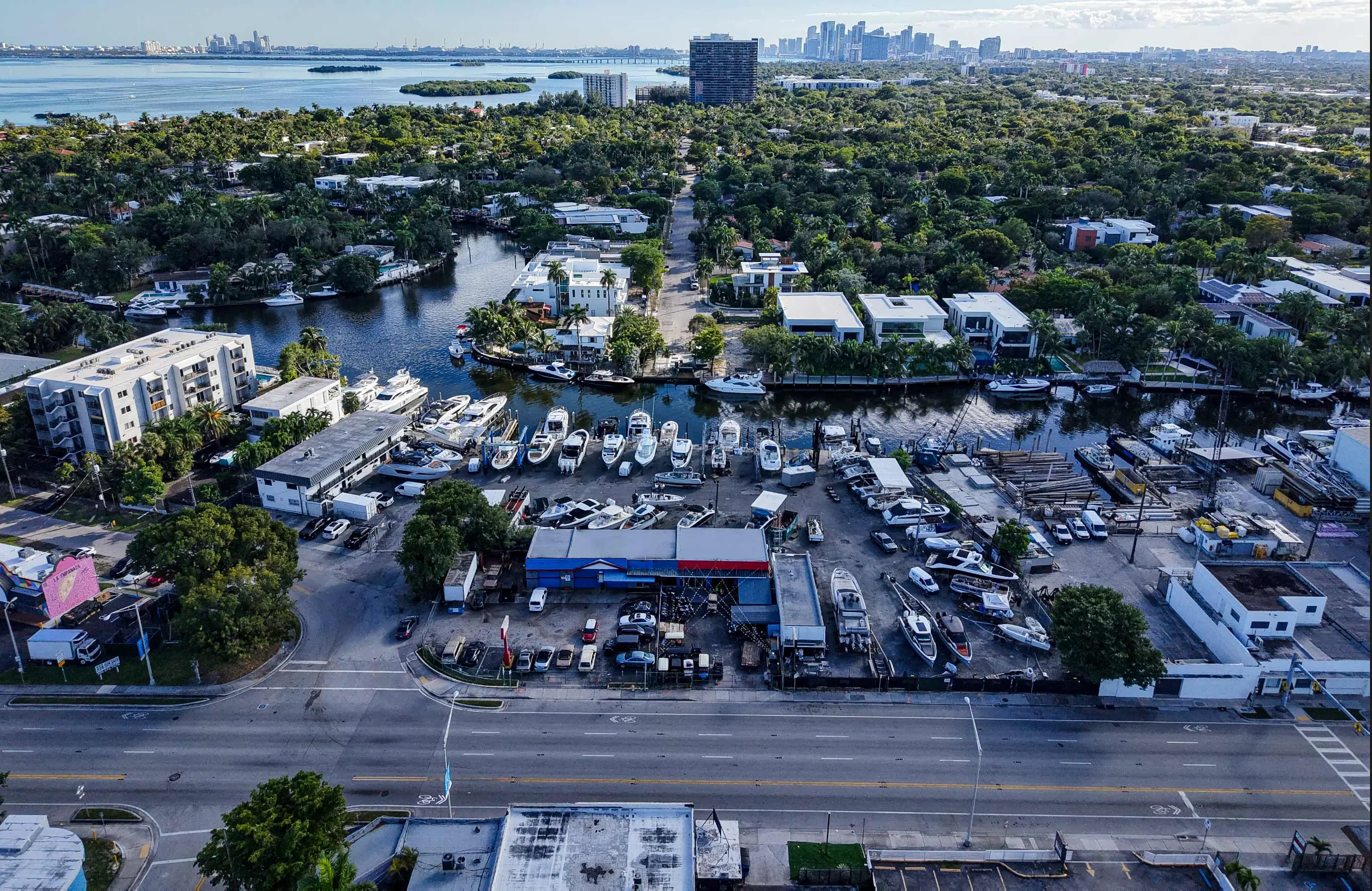
Aerial view of 830 NE 79th Street in Miami, with the canal and the Miami skyline in the background.

The space at a glance

Address830 NE 79th St, Miami, FL 33138
Available sectionWest side of the building
Interior1,322 sq ft with 12 ft ceilings
Outdoor lot67 ft by 50 ft (3,350 sq ft), fully fenced with a front rolling gate
LayoutShowroom with glass entrance, counter, service bay with a 9 ft roll-up door, storage and service area, rear office, two restrooms
Lease typeModified net. Property taxes are included in rent; the tenant pays insurance and maintenance
Asking rent$5,500 per month as of October 2026
AvailableOctober 15, 2026
ZoningT5-O (City of Miami), with a long-standing automotive or marine use history that the tenant must verify

The interior is built out for scooter sales and service, with a showroom, a service counter and a storage and service area. It also has HVAC, parking and signage that is visible from 79th Street.
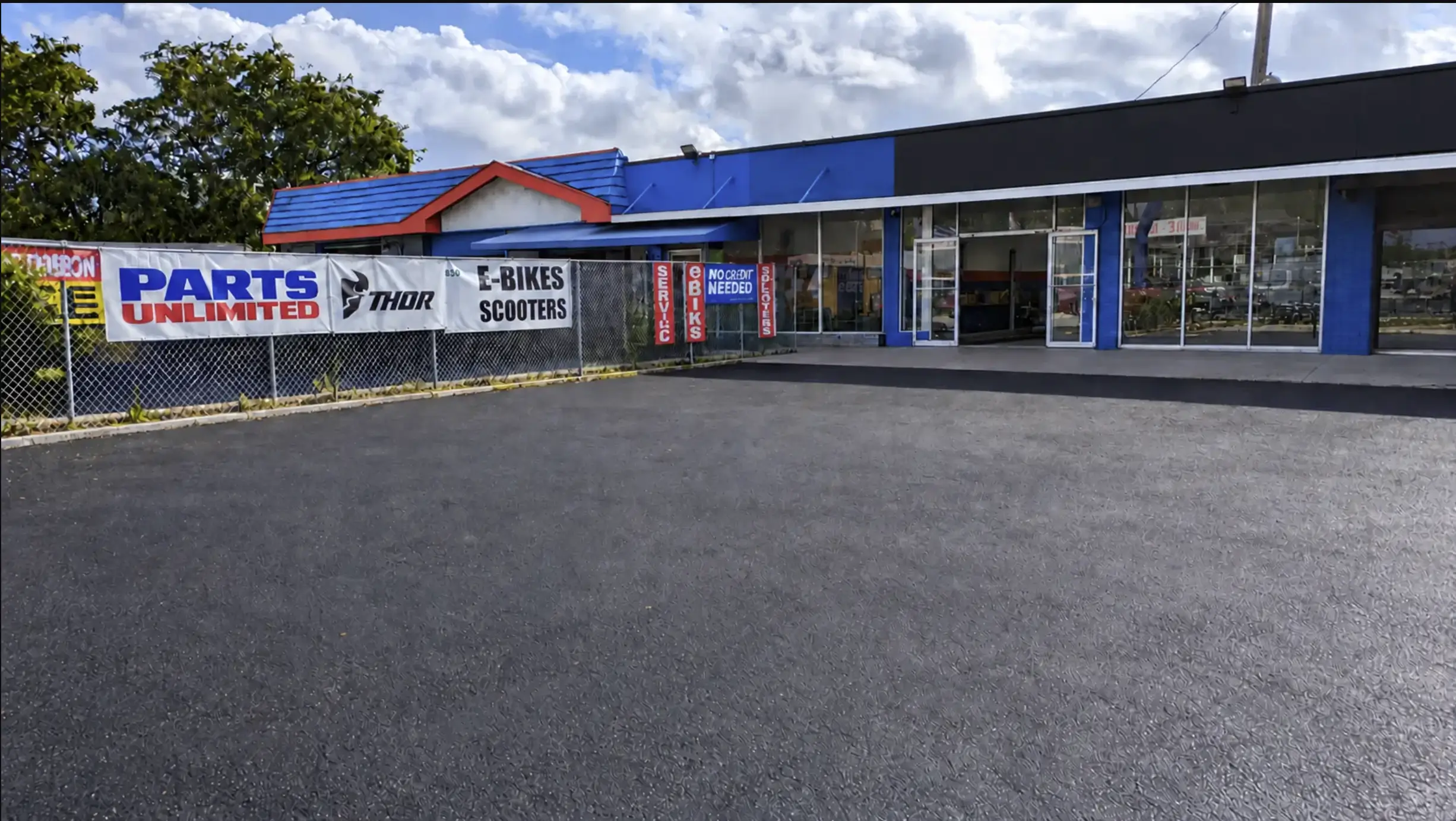
Front of 830 NE 79th Street, showing the paved, fenced lot and glass storefront.

Why the location works

  • Traffic. About 27,600 vehicles a day pass on NE 79th Street between Biscayne Boulevard and North Bayshore Drive, according to the Florida Department of Transportation’s 2025 count.
  • Biscayne Boulevard. The property is about three blocks east of Biscayne Boulevard (US-1).
  • The causeway. NE 79th Street continues east as the 79th Street Causeway to North Bay Village and Miami Beach.
  • The neighborhood. Shorecrest, Belle Meade, the MiMo District and Morningside are all close by, with Miami Shores and El Portal a short drive away.
  • A built-in neighbor. An established auto repair shop occupies the east side of the building under a separate lease, which brings a steady flow of vehicle owners to the property.

The listing site has a page on what is near 830 NE 79th Street, including shops, restaurants and parks within about half a mile.

What kind of business it suits

The owner is looking for uses such as:

  • Scooter sales and service
  • Car sales
  • Golf cart sales and service
  • Car rentals
  • Other retail or store uses

The space is not available for auto repair, since the east side of the building is already leased to a repair shop. Other small-business uses are considered case by case.

What a tenant needs to verify

The property has a long-established auto repair occupancy history and a long-standing automotive-related use history. That is difficult to replicate at a newly permitted site.

It does not replace a tenant’s own homework. Any proposed use is subject to the tenant’s independent verification with the City of Miami, including zoning, Certificate of Use, licensing, permitting and occupancy requirements. Confirm those for your specific business before signing a lease.

Leasing directly with the owner

The property has had the same owner since 1986, and the lease is handled directly with the owner.

Frequently asked questions

Where is 830 NE 79th Street?

In the City of Miami’s Upper Eastside, on NE 79th Street about three blocks east of Biscayne Boulevard, ZIP code 33138.

How big is the space?

The west section has 1,322 square feet of interior space and a fenced outdoor lot of about 3,350 square feet.

What is the rent?

The asking rent is $5,500 per month as of October 2026, with property taxes included. The tenant pays insurance and maintenance. Check the listing page for current terms.

Can the space be used for auto repair?

No. The west section is not available for auto repair use.

Details come from the owner’s listing and were current in October 2026. See the listing page for the latest availability.

South Florida Foreclosures August 2012

There were 4,823 foreclosures filed in South Florida in August this year, according to Condo Vultures, a 43.5 percent increase from the same month a year ago. A majority of the foreclosures, or 2,048 of them, came in Miami-Dade, which has recently overtaken Broward County to lead South Florida in foreclosure filings. Broward County came in second with 1,511 foreclosures, compared to 1,043 in August of 2011. Palm Beach County ranked third with 1,264, about 60 percent more than the 797 foreclosures it saw in the same month the previous year.

Overall, 31,378 foreclosures were filed in South Florida through the end of August, a 53.2 percent increase from the same period a year ago. Broward accounts for 43.8 percent of all those foreclosure, while Palm Beach and Miami-Dade counties split the remaining foreclosures at 25 percent and 31.2 percent, respectively. — Christopher Cameron


Link: South Florida Foreclosures | August 2012 via therealdeal.com

Tips for First Time Condo Buyers

If you are someone who is considering purchasing a condominium, you will find that the decision is not an easy one. How big should the unit be, where do you want to live and what amenities are you willing to insist on? The last thing that you want to do is to get stuck with a condo that you don’t like; I’ve seen it happen, and it’s ugly! Make sure you have a few facts in mind before you proceed.

Location, Location Location
In many cases, it’s all about where your unit is located. For example, if you want to make sure that you are at the heart of the action while being a short drive away from some of the most gorgeous vistas in the world, you can’t beat Miami. A condominium is an investment, and one way to look at it is that you will be investing in the area that you live in. Make sure that you are willing to do this before you settle on a condominium unit. The location is something that will contribute a great deal to how you eventually feel about your living space.
Consider the Condominium Association
Some associations simply want to make sure that you don’t play loud music at all hours, while other associations are significantly more strict about things like decorations and property use. Walk around a condominium that you like and talk to your prospective neighbors. Ask them what the association is like and whether they like it. This is a good ay to find out if you are a good fit for the unit in general. If you have any doubts or questions, try to speak to the association itself, rather than going through a proxy. This will help you figure out how you feel about the people who are going to be living next to you.
Consider Your Needs
Before you even start looking at things like price, make sure that you consider your needs. What do you need out of your living space? For example, does your unit need to have a lot of light? Do you intend to have company staying over on a regular basis? Do you have pets and does the condominium allow them? Make sure that you sit down and make a list of everything that you need. If you are planning to stay in your unit for many years, make sure that you consider what that might mean in terms of your needs.
Whether you are considering the size of your unit or you simply want to make sure that you have a breathtaking view, don’t make your first luxury condominium into a real estate disaster. A great condo is a fantastic opportunity for you so choose carefully and find a great place to stay.

Let Miami Investment Property help you find the perfect condos for sale in Miami. Rental options are also available.

Reverse Mortgage Information

Reverse Mortgage Information

A reverse mortgage releases the equity in the home in a single payment. A senior reverse mortgage is usually reserved for seniors over the age of 62. The homeowner is not obligated to repay the loan until the owner’s death. At that time, the lender will assume the title of the property as repayment. The owner may also choose to leave or sell the property also. The homeowner may be out of the home for up to 364 consecutive days and the reverse mortgage will still be effective.

The reverse mortgage differs from the conventional mortgages in several ways. A reverse mortgage requires no payments throughout the duration of the loan. All the interest is added to the lien on the property. If the owner receives monthly payments from the equity in the home, the debt on property increases each month. In a conventional mortgage, the homeowner is obligated to make a monthly payment to the lender. Any equity in the property may only be obtained through a second mortgage or home equity loan.

If the property increases in value after a mortgage, clients may obtain a second or third reverse mortgage
based upon the increased value of the home or the increased equity in the home. Most lenders are reticent about approving a second or third lien on a property, because the balance increases over time. Banks must ensure the client will have the funds to pay the loan after their death. This option, however, is an available option for some clients.

Lenders may allow refinancing of a reverse mortgage if enough equity is present in the home. If interest rates are reduced, then some people may qualify for a streamline refinance rate.

Clients must also be aware that when a reverse mortgage is obtained, the amount of money recorded on the loan is higher than the dollar amount actually dispersed. The amount is often misconstrued by buyers as the amount owed on the mortgage. In actuality, the amount is the maximum lending amount given the equity in the home at the time of the mortgage. The required payout is calculated based on the amount dispersed.

Florida Reverse Mortgage and Reverse Mortgages in California

A Florida reverse mortgage is the same as any mortgage anywhere. There are not any credit requirements, income requirements or health requirements associated with a reverse mortgage in Florida. In most instances, the borrower is the homeowner and is of 62 years of age or older. The reverse mortgage is also in conjunction with HUD’s Federal Housing Administration (FHA) as well. The borrower may not owe more on the home than the home is worth. The lender may not seek recourse on the loan through other assets, income or estate.

Best Reverse Mortgages

Reverse mortgages are not popular in United States. In February of 2011, lenders expected the program to expand, but the program did not. Specifically, they expected the FHA Saver reverse mortgage to gain momentum because of its 0.1 percent mortgage insurance premium rather than the 2.0 percent required with regular FHA-insured reverse mortgage products.

This year, HUD has approved over 6900 standard reverse mortgages. This percentage is down from last year. Only 296 FHA Saver loans were approved by HUD as of January 2011.

Reverse Mortgage Wholesale Lender

Experts have found that the senior market represents $4.3 trillion of the home equity available, according to ReverseMortgageWholesale.com. Currently, lenders have only capitalized on 2% of this market share. Because seniors do not have to make monthly payments to receive access to the funds, reverse mortgages are a win-win situation for all.

Clients that decide to obtain a reverse mortgage should keep in mind that reverse mortgages are supported by government funding. The fees and rates are regulated by government entities. Before obtaining a reverse mortgage, ensure that lenders provide full disclosure and a good faith estimate. All fees and costs should be discussed.

Clients should shop around to various lenders to find the best deal available. The reverse mortgage calculator can help someone determine how much cash they would qualify for. Providing accurate information to the lender will ensure that a valid estimate of the amount available will be provided.

Reverse Mortgage Stimulus

Congress recently signed in the reverse mortgage stimulus into effect to help downsizing seniors. They can conserve cash and not have any payments for the rest of their lives. Single family homes, condos, PUDs and other loans are all available. No origination fee and no monthly service fees are required.

Fannie Mae “Homekeeper” Reverse Mortgage is another type of mortgage that is similar to other FHA/HUD monthly programs. The limit on the “Homekeeper” mortgage is $417,000, but clients rarely select this option because the FHA currently has a $625,000 limit. The interest rate is typically 4.5% about the “One Month Certificate of Deposit Index.”

Will I Be Able to Pass on My property to My Heirs?

Clients that do a reverse mortgage may sell the property, pay off the property with life insurance or will it to a surviving family member. The survivor may then refinance the remainder of the mortgage into a regular mortgage and pay the balance due on the home. Heirs may also have access to any equity remaining in the property. If the person dies with no heirs, the lender will accept the title of the property as payment in full until the time of death.

Reverse Mortgages and Property Taxes

Clients that obtain reverse mortgages will be required to pay property taxes annually. Other than property taxes, seniors receive their property tax free. The reverse mortgage actually pays the client to remain in the property until their time of death. There is not cap on the age that a person may live with a reverse mortgage. Principal reductions are also allowed if the senior client decides to take advantage of the property.

How are Interest Rates Calculated?

Interest rates are calculated by the government. An initial rate will be set at the time of closing of the reverse mortgage loan. Some reverse mortgages have variable or adjustable interest rates that adjust according to the market conditions and other reverse mortgages are fixed rate for clients that desire predictability.